Theme 2 of 6

Learning

Strengthening the learning ecology of indigenous languages, in particular minority and endangered languages, has been considered to be one of the highest priorities throughout the stakeholder consultations. Although the language policy for schools in Namibia stipulates that "Grades 1-3 will be taught either through the mother tongue or a predominant local language", the lack of materials and teachers proficient in minority languages, among other challenges has hampered its implementation. Thus the aim is to establish a learning ecology inclusive of Indigenous languages and knowledges in education systems at all levels (from Early Childhood Development Centres (ECDC) to University) and in non-formal and informal settings facilitating intergenerational, intercultural, and interlingua knowledge transmission. The anticipated output is an inclusive, equitable, intercultural, quality education and lifelong learning environments and opportunities in Indigenous languages provided in formal, non-formal and informal educational settings.

What stands in the way

Challenges

  1. No Indigenous Knowledge Curriculum

  2. No Indigenous Languages as School Subjects

  3. Primary School Subjects not Taught in Indigenous Languages

  4. Social-Cultural Exclusion

  5. Lacking Material on Indigenous Knowledge and in Indigenous Languages

  6. Lacking Educators/Teachers Trained in Indigenous Knowledge and Indigenous Languages

  7. Lacking Supportive Educators

  8. Children not Speaking Indigenous Language

  9. No Extra-Curricular and Lifelong Learning Programmes

  10. Access to language resources in Indigenous Languages and Indigenous Knowledge content

  11. Opportunities to digitalise and disseminate Indigenous Knowledge and Indigenous Language content

  12. Lack of Early Childhood Development Centres

The way forward

Strategies

Each strategy lists the proposed actions and, where already identified, the actors who could lead them.

Develop inclusive Curriculum and Material

  • Create/translate standard primary school curriculum in Indigenous languages

    Actors: NIEDLanguage experts

  • Create and integrate cultural heritage (art, history) and Indigenous knowledge content and material into curriculum of primary and secondary school

    Actors: NIEDIndigenous knowledge expertsEducatorsResearchers

  • Establish Indigenous languages as school subject with appropriate content and materials

    Actors: NIEDLanguage expertsEducatorsResearchers
Educate Teachers

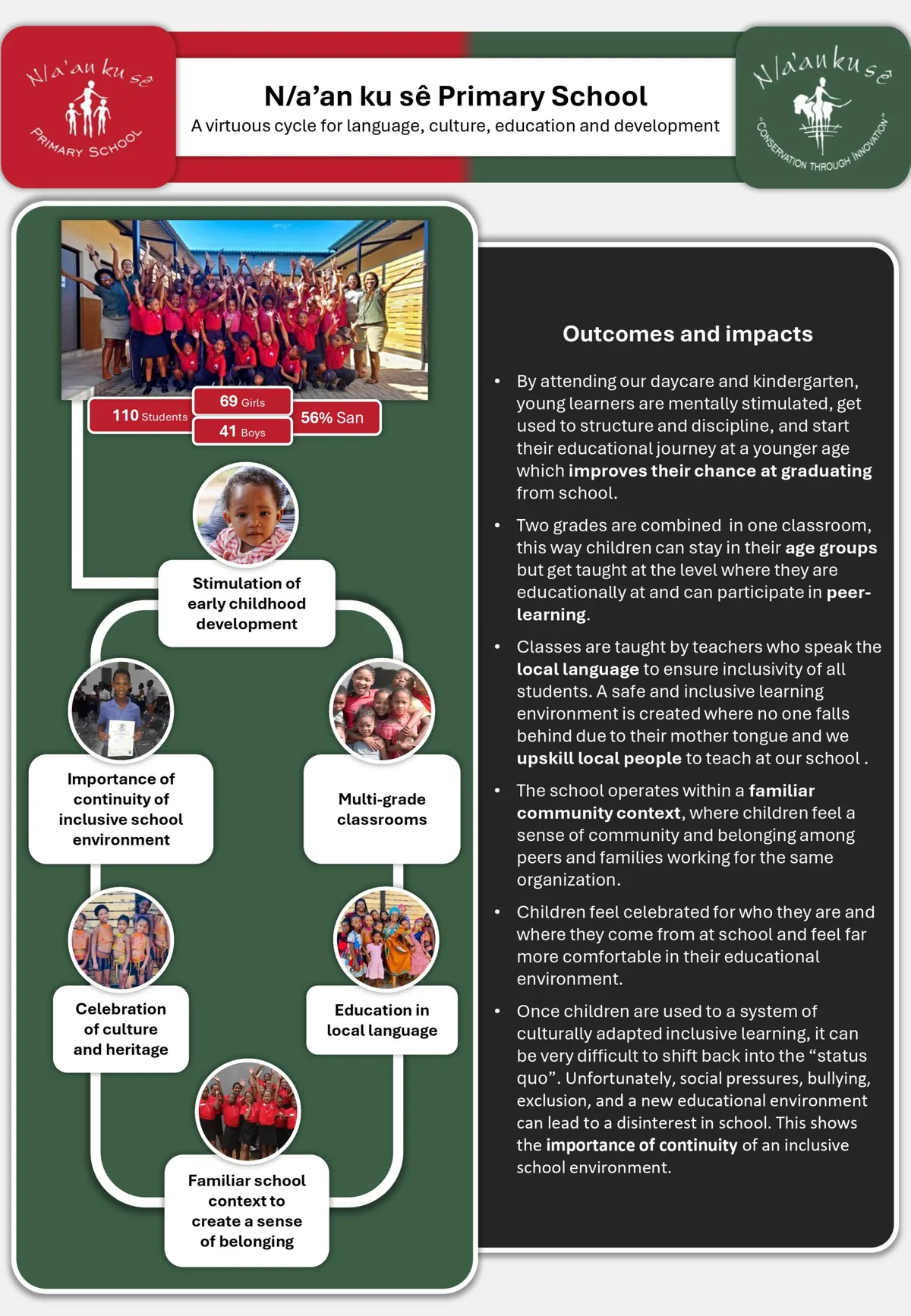
  • Educate Indigenous language speakers as teachers

    Actors: Teacher training institutes / Naankuse

  • Teacher training in Indigenous language

    Actors: Teacher training institutesLanguage centers

  • Educate teachers on Indigenous knowledge content and pedagogies

    Actors: Indigenous knowledge experts

  • Train teachers on socio-cultural inclusion, cultural values and belonging

    Actors: Teacher training institutes

Ensure Socio-Cultural Inclusion in school system

  • Establish socio-cultural inclusion and belonging programs

    Actors: Psychologists

  • Administrative accommodation of indigenous practices (e.g., cultural attire instead of uniform, coming of age ceremonies)

    Actors: School adminMinistry

  • Place and train supportive school staff (e.g., school counsellors)

    Actors: Ministry

Establish Language institute and resource centre

  • Provide access to multi-media and printed resources in Indigenous languages and on Indigenous knowledge (online and offline)

    Actors: Librarians

  • Run lifelong learning programmes in Indigenous languages and on Indigenous knowledge

    Actors: Educators

  • Organise cultural events and activities promoting the use and preservation of Indigenous languages and Indigenous knowledge

  • Provide infrastructures for content creation (recording of personal stories,...)

  • Provide infrastructures for content dissemination (community radio,...)

  • Ensure accessibility of Indigenous languages/Indigenous knowledge material for all and especially minorities

Establish inclusive Early Childhood Development Centre

  • Develop digital and printed Indigenous knowledge and Indigenous language material

    Actors: Palms for LifeTech expertsEducators

  • Create educational cultural games and toys (physical and/or digital)

  • Teach cultural practices, values, virtues, respect and communication

  • Prioritise establishment in non-Indigenous language communities (urban, dislocated children)

On the ground

Initiatives